Showing posts with label free. Show all posts

Thursday, October 13, 2011

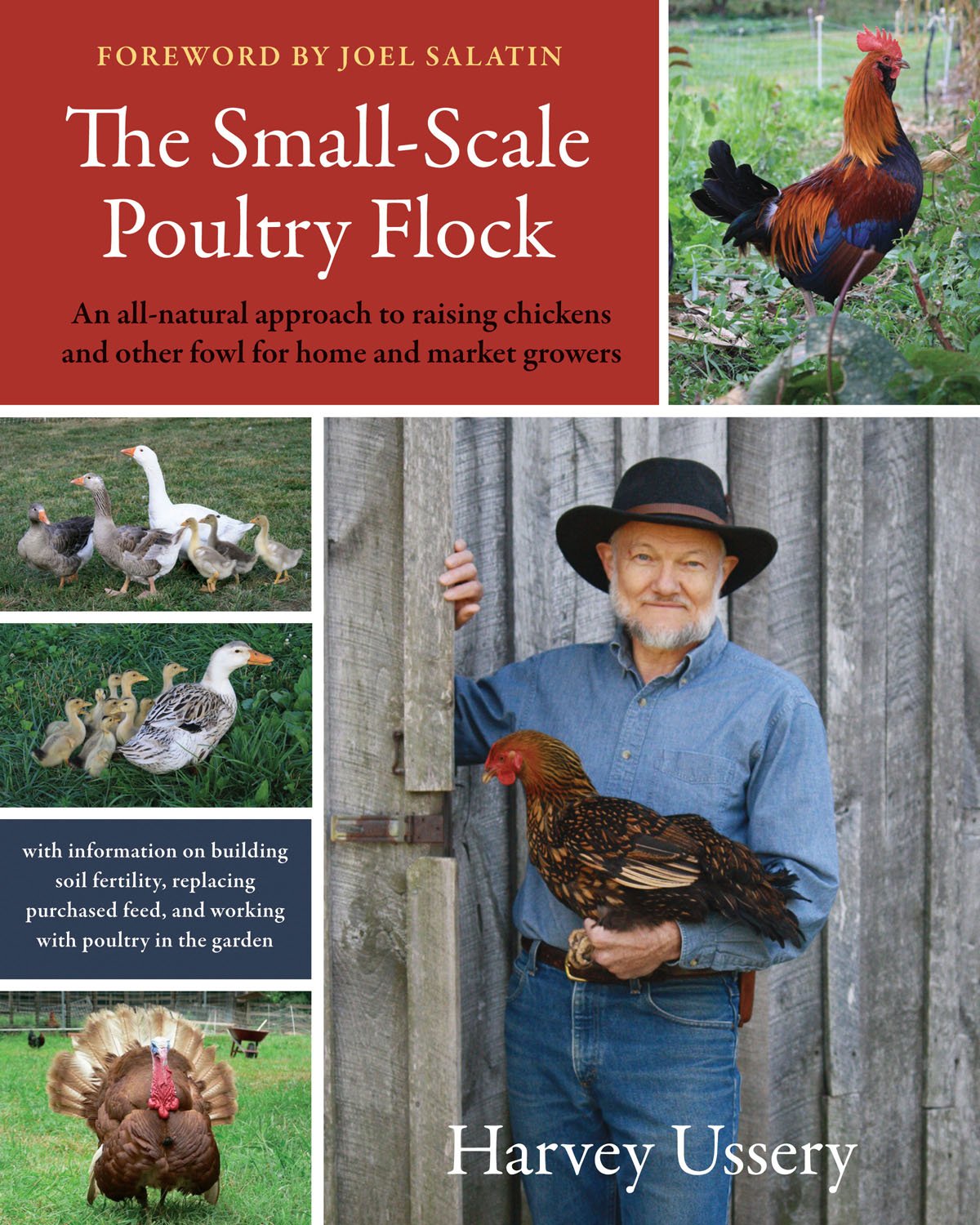
Giveaway: The Small-Scale Poultry Flock


As I mentioned in my book review of The Small-Scale Poultry Flock, I received two complimentary copies of this book.  So I'm hosting a giveaway to share the bounty with my readers.  This is a fantastic book for all homesteaders, urban chicken-keepers, and those who have yet to acquire their first small flocks.  If you haven't seen my review of it from last week, you may want to check that out.  By all means, do visit the author's website, The Modern Homestead.  It's full of thoughtful insights and useful information for anyone interested in moving towards self-sufficiency on a small acreage.

I mentioned that there was other news to do with Harvey Ussery.  I was thrilled to hear that he would once again be speaking at PASA's Farming for the Future Conference, which I attend each year in early February.  Hearing Harvey's presentation at this conference  four and a half years ago was what inspired me to start my own backyard flock.  But then, to my utter amazement I got an email from him a few weeks ago asking if I would like to co-present with him during his all day pre-conference homesteading track.  I went through a rapid series of thoughts and reactions, all centering on my paltry amount of experience as a homesteader compared to his two and a half decades in this vocation.  I was floored, honored, uncertain, hesitant, and thrilled.  In the end, I provided plenty of caveats, but ultimately said yes.  So!  I'm going to be presenting at next year's conference if only as a junior member to a seasoned and top-notch speaker.

I've encouraged my local-ish readers to attend this conference before, and I've written up summaries of things I've learned from this event in past years.  Now I can say, come introduce yourself to me at the conference.  Even if you've already read (right here on the blog) much of what I'll be talking about, you will learn a lot from Harvey Ussery, and I guarantee you'll come away loaded with enthusiasm and motivation.

Onwards to the giveaway.   Up for grabs is one copy of The Small-Scale Poultry Flock.  This is not exactly a freebie giveaway; I want something in exchange for your chance to win.  I'm asking for a comment with your best frugality, homemaking or small-scale homesteading tip.  I want to see some creative ideas here, people, not the obvious beginners-level ideas you find in the most simplistic magazine articles.  Tell me your secrets for saving energy, making a delicious meal on a dime, a great gardening trick, a labor-saving tip for any part of the homestead, a special recipe you use for canning, lacto-fermenting, or curing the foods you put up,  or anything else clever you've come up with that fits in a homemaking or homesteading category. 

Tedious stuff you should read anyway:  One entry per person.  Entries for this giveaway will be accepted until Wednesday, October 19th at 6pm, Eastern time.  You must either be signed in to some account that will easily and obviously lead me to a way to contact you, or else leave a means of contact in your entry comment.  Anonymous comments that do not include an email address will not be considered as entries for the giveaway. Winner will be chosen randomly from all valid entries, which must contain the aforementioned tip.  The winner will need to disclose (privately, to me only) full name and mailing address.  I'm opening the giveaway this time to readers from overseas, so get your comment-entries in.  I'll announce the winner by Friday, October 21st.  If I can't reach the winner in a couple of days, I'll select another and try again until it all works out.

Good luck!

Edit 10/19/2011: Comments are now closed.

Friday, September 23, 2011

A Good Gleaning Haul


Yesterday while running an errand I noticed that the Bartlett pear tree around the corner from our home was hanging heavy with fruit.  The owners of this property have put up a "free pears" sign on their lawn about half the years since we've been living here, but it hasn't been consistent.  Well...I wanted those pears, and I wanted them before they all fell to the ground.  Pears are best picked off the tree before they ripen.  Many times the ones that fall naturally develop hard crystal-like formations in their flesh, which aren't very pleasant to eat.

We purchased a long-handled fruit picker basket last year to help us pick the high fruit from our own apple tree.  It's a handy thing that extends our reach by about 9' (2.7 m).  So we put it in the car along with a bushel basket (I was feeling optimistic) and went to ask after the pears.  The property is just far enough away from ours that I don't consider these people neighbors, exactly.  Our area is sort of rural, and sort of suburban; "around the corner" can be a fair distance in these parts.  As is so often the case, when we asked politely the owner of the property was delighted to let us take the pears.  He said he didn't like to see them go to waste, but that he and his wife don't use them.  I mentioned that I'd collected pears from his tree a few times in previous years when he'd put the sign up, and thought perhaps he just hadn't gotten round to putting one up this year.  He said that was exactly the case and emphasized repeatedly that we were welcome to come back any time for the fruit.

We cleaned the tree of almost all the fruit that was still on the branch.  There were a few that even our long-handled picker couldn't reach, but not many.  As a courtesy we picked up all the fruit on the ground too.  Most of these had obvious damage on them, some from a lawn mower.  I'll send them on with our early drop apples to my farming friend who raises hogs.  The appearance of the pears makes it obvious that they haven't been sprayed with anything, so I'm sure she'll feel comfortable giving them to her animals.  The fruit we kept for ourselves came nearly to the top of our bushel basket.

I mentioned that pears are best picked before they ripen on the branch.  It turns out that pears are rather tricky to bring to what humans consider a nice state for eating.  They need to be picked before maturity and then chilled.  The chilling time depends on the variety, but fortunately the Bartlett only requires a couple of days.  So these will be in our refrigerator for a little while and then I'll spread them back out to ripen up on cardboard in the front room.  That way I can keep an eye on each one and no fruit gets crushed by the weight of fruit above. It's certainly a lot of fruit.  I don't mind though.  In fact, getting this much fruit free for the picking was a great mood booster.  I've been frustrated with several things that are happening or not happening around the homestead lately.  Free pears go a long way towards cheering me up.  And this is a nice time of year to make jam and do the hot work of canning.  Temperatures are definitely dropping off.  I put aside a small amount of elderberry juice last month and stashed it in our freezer.  I know what a surreal and gorgeous color even a little bit of juice makes when I combine it with a pale fruit like pears.  So when the pears ripen up, I'll make more elderberry-pear jam.  Needless to say, when it's done some will go to our benefactors around the corner.

I'm also planning to revisit an amazingly yummy cake recipe I found over at 101 Cookbooks.  Heidi's salt-kissed buttermilk cake recipe is easily adapted to many different seasonal fruits.  I tried it once with pears from the farmer's market and simply could. not. stop. eating. it.  The nice thing about that is that for a cake, this one is surprisingly non-naughty: only half a cup of sugar and 4 tablespoons of butter.  Buttermilk does the rest in terms of adding flavor and body to a very light-textured cake.  I switched from Heidi's raspberry and lemon zest flavorings to sliced pear, minced crystallized ginger and almond extract.  The salty-sweet topping for the fruit made the flavors really pop.  This one went directly into my printed out recipe binder.

My husband is shocked that I don't count gleaned fruit as part of our harvest tally.  I explained that my project is to demonstrate how much food can be produced by perfect nobodies on an average residential lot in our area.  Since we didn't grow it ourselves and it didn't come from our property, I don't see that we should get "credit" for it as part of our harvest.  I'd certainly count any weeds we foraged off our own property for consumption, but gleaning elsewhere is another thing entirely.  Still, gleaning what we can is part and parcel of our overall drive for frugality, and I hate to see food go to waste.  So I see his point.  Maybe from now on I'll keep a separate gleaning tally for things we gather off-property.  It could be an interesting adjunct figure to go with our harvest tally.

Any good gleaning going on in your neck of the woods?

Monday, March 7, 2011

Homesteading Books Giveaway


In honor of a certain overreaching family in southern California, I'm giving away three homesteading titles this week.  I've ordered three copies of Kelly Coyne and Erik Knutzen's book, The Urban Homestead.  They're now shipped and on their way to me.  One is my copy, and two are up for grabs.  Also, I'm giving away my own, gently used copy of The Backyard Homestead.  Here's your chance to win one of these great titles.


To enter the drawing for one of these books, leave a comment on this post briefly describing your homestead - either as it exists right now, or what you hope to achieve in the future.  Comments must be received by 6pm Eastern time, on Friday, March 11th, if you want a chance at winning one of these books.  Sorry, but this is open to US residents only.  **If you're not signed in with an identifiable account, leave enough identifying information so that I can verify the prize goes to the right person. (e.g. Clare in Boston, or something similar.)**  If you're only interested in one or the other of these titles, please indicate that in your comment so I can be sure they go to readers who will use these books.  If the random number generator picks someone not interested in a given book, I'll generate another number.  I'll announce the winners by Monday, March 14th at the latest.  Good luck!

Wednesday, June 30, 2010

Tuscan Kale Seeds Are In

The prolonged hot weather we've been having is moving everything in the garden along very quickly this year.  The Tuscan kale plants that I allowed to overwinter have already set their seed and matured it.  This seed, from plants I put in last year, represents three generations of survival here in southeastern PA.  Given the horrendous wet gardening year that was 2009, and our fairly impressive winter storms, this is a good start towards selecting for plants that will tolerate the wide swings that nature brings to this region.

I have enough seed to provide about a dozen of you with a small quantity of seed.  You'll need to let your plants go to seed in the second year if you want a larger quantity of seed.  But that will only mean that your seed is better adapted to your particular location as you save it year to year.  And the seed will be abundant.  This happens to be very easy seed to save.  Simply unfold a square of newspaper under the dry seed pods hanging off the plant, and rub the pods between your hands.  The seeds and some split pods will fall onto the newspaper.  Then you fold up the newspaper, keeping all the seeds in, and open it up somewhere cool and dim so all the insects can crawl away and the seed can completely dry.

Just so you know, this kale goes by several other names, including kale lacinato, dinosaur kale, and cavolo nero. In some parts of the US, if you plant this seed as soon as you receive it, you'll stand a good chance of getting a late fall crop.  Tuscan kale is pretty cold hardy and it takes a serious frost or two to shut it down for the year.  In my zone, 6b, about one half to two-thirds of the plants survive the winter with absolutely no help from me and go on to set seed in the next year.  I love the baby kale leaves I can harvest early in the spring from those plants.

If you're interested, leave a comment with your name and mailing address.  (I know I can legally mail seed to Canada, but I'm unsure about other countries.  If you can point me to references about the legality for your country, I'm game.)  I will delete all comments with personal information as I read them.  If you have something to say about this kale or seed saving other than asking for some seeds, leave a separate comment.  Oh, and whoever it was that wanted to trade some of your Russian kale seeds for some of my Tuscan kale seeds, I'm still interested.

Friday, March 5, 2010

Favors & Rewards, Or, Why It's Good to Know Your Food Network

Free salmon

So farming friend called me up Wednesday night and inquired about the state of my chest freezer. Was there, perhaps, room in there for 50 pounds of salmon filets? See, she runs a monthly on-farm market during the winter season when the local farmer's markets don't operate. She invites a few choice vendors to show up and sell their goods, but also will sell the products of a few other local vendors. One of those products is wild caught Alaskan sockeye salmon. The couple that sells this delectable treat maintains a fishing license and a fishing boat in Alaska, and that's how they spend their summers. The quality is outstanding, and as carbon footprints go for fish, this is pretty light on the earth.

So farming friend needed another couple cases of the filets to be ready for her on-farm market this weekend. But she has a day job, and no one was going to be at her farm yesterday to take delivery. So she asked me and the salmon lady if it could be dropped by our place in the course of her delivery rounds. No problem for me: I was around and having dinner with farming friend that night, so my freezer space wouldn't be tied up long. No problem for salmon lady as we live closer to the day's other stops than farming friend does.

I spent between 5 and 10 minutes chatting with salmon lady and helping her pack 50 pounds of salmon into our freezer and then some into a cooler with ice packs. That evening I put the fish back in the boxes and took it with me when I went to dinner at farming friend's house. It was nothing. But salmon lady was so appreciative - as if I were doing her a big favor - that she offered me a free fillet. Now, I'm already on record as never saying no to handouts. You can believe I didn't turning down ethically fished wild Alaskan salmon that sells for $12.75 per pound. Needless to say, I was thrilled.

Just for Ali, a bonus picture of the cats with free mushroom bags

But the bounty didn't end there. When I got to farming friend's house for dinner, the first topic of conversation after getting the salmon in her freezer was all the mushroom bags she'd gotten from local mushroom producers. Like battery egg facilities that kill "retirement age" laying hens, (who are still capable of years of egg-laying) because their production is no longer optimal, mushroom farmers keep mushroom substrate only through the first few and most abundant flushes of mushroom production. Of course, there's no cruelty involved in either packing bags of inoculated sawdust as close together as possible, nor in getting rid of them as soon as they pass a peak of production. Nonetheless, farming friend had been given several large bags of sawdust inoculated with oyster mushroom spores. And she wanted to know if I wanted a couple of them. What did I say? (Altogether now; say it with me:) "Sure! Thank you!"

I don't want to create the impression that people chuck free food at me on a daily basis, but similar things have happened more than a few times since I've gotten to know my local farmers and producers on a personal basis. Free eggs, free bones to make stock, free pork jowls, the loan of useful and expensive tools, and now enough free salmon for four modest portions and a decent chance at a small crop of oyster mushrooms. Obviously, I also just like to know where my food comes from, even when I pay a fair price for it. But there really are multiple advantages to getting to know your farmers.

Of course, I try to be open handed too. I've arranged to loan our beater pickup truck this weekend to a young Agricultural Extension agent who needs to haul some horse manure for her own garden. And our broadfork will be loaned out this spring too. Farming friend got her vermicomposting system going with some red wiggler worms from our bins, and I plan to take containers of worms to the last meeting of my soils class next week to get some fellow students started on vermicomposting as well. It seems to me that farmers and other sustainability minded folks are far more open to bartering, and interested in making just a little more effort to share resources, and ensuring that nothing goes to waste. That's a good group of people to know and be a part of.

Wednesday, December 2, 2009

First Foray Into Home Curing: Guanciale


Let me tell you why it pays to know your farmer. That farmer friend I've mentioned a few times? The one who raises her animals on pasture, including our Thanksgiving turkey, and who occasionally throws some bones my way for free? She called me up on the Friday before Thanksgiving to ask if I wanted some random pork bits. Seems a few of her customers that bought whole or half hogs didn't want some of the less choice cuts, even though they had paid for the entire animal. So I was being offered pork jowls, organs, and possibly some other trimmings or offal as well. Of course I thought of Hank, and of course I said I was interested. My policy is not to turn down free handouts unless what's being offered would really present problems. Free pasture-raised local pork does not present any problems. The need for a little research, yes; problems, no.

We got to the butcher's shop on Sunday morning. It wasn't clear exactly what bits were unclaimed, and it was clear that the butcher would put whatever he was permitted to keep into scrapple or headcheese, and render down any fat into lard. Not being a paying customer, I didn't want to seem too acquisitive. I left with two pork jowls, a liver, heart and a tongue.

We're headed into the perfect time of year for curing meat - the dry, cold months of winter. And I've long wanted to try making my own guanciale (say: gwan CHA lay) - cured pork jowls prized in southern Italy and eaten like bacon. It's the authentic ingredient in several traditional pasta sauces, including spaghetti alla carbonara, for which I've always substituted American bacon. Traditional carbonara only has a handful of ingredients: eggs, garlic, cured pork, black pepper, noodles, and a good aged grating cheese. We produce our own eggs and garlic. I can get a surprisingly good grating cheese locally made from pasture-raised raw milk. Being able to source locally and then cure pork jowls into guanciale, and therefore to prepare a truly local carbonara or Amatriciana would be nothing to sneeze at. So starting about ten days ago I embarked on my first home curing project.

I cannot tell you how thrilled I was to trim out a pair of hog jowls, scatter a mixture of salt, sugar, black pepper, other spices and some herbs from our garden over them, weight it all down in a bowl, and stash them in the fridge. I felt like the cat that ate the canary, with a free pork experiment in the fridge. It almost didn't matter how it turned out. Almost. As the meat sat in the salt-sugar mixture over the past week, it released a fair amount of liquid which I poured off from time to time. I added some more of the curing mix and turned the jowls over each time I did this. After just over a week I took the meat out of the bowl. It had a noticeably stiffer feeling than when I first salted it. I reapplied the curing mix wherever the meat seemed to need it, and hung it up in our refrigerator to begin the drying process. I managed the hanging by cutting up a wooden dowel into two pieces to fit in the shelf supports inside the fridge, and then piercing the jowls with two metal skewers which rest across the dowels. I've got a plate underneath to catch any drips as the drying process begins.

Fortunately, my husband is away on a business trip, so it's only me rummaging through the fridge this week. I plan to find a place to finish the curing process in our garage after he gets back. That will allow the outdoor temperatures to settle a little more fully into true winter, and let me monitor the beginning of the drying stage quite carefully. If there's any risk of spoilage, it would be right now, when the meat is out of its brine but still pretty moist. So starting the drying process in the refrigerator seems like a good compromise. All told, the guanciale will probably dry down for 4-6 weeks.

The organ meats were a little more challenging to deal with. I have not been a fan of organ meats over the years. The whole idea of eating a chunk of flesh designed either to clean the blood or produce urine somehow lacks a certain appeal. But I'm trying hard to cure myself of food prejudices, and this is certainly an opportunity to put my resolve to the test. I like haggis, so I'm trying to work my way into things from that angle. Hank recommended an Umbrian sausage called mazzafegati, and a dish of pounded pork heart schnitzel with spaetzle. Those Germans, Italians, and Spaniards, good pork eaters that they've been over the centuries - they're the ones who would know how to eat everything but the squeal. Both of Hank's suggestions sounded good to me, but I didn't have time to deal with making them in the days leading up to Thanksgiving. So all the organs got thrown in the freezer. When I get hold of some pork fat and regular pork to bulk out the liver, I'll take a stab at that mazzafegati. And yes, I'll keep you posted on such efforts, as well as how the guanciale progresses.

Wish me luck in my new food preservation endeavor!

Tuesday, February 17, 2009

Free Gardening Supplies + Beer


Over the weekend we jumped into our beater pickup truck to run a bunch of gardening-related errands. I'd been waiting for an opportunity to knock out several tasks in one run, and it was finally the right time. There's a mushroom farm not too far from Kennett Square that gives away free organic mushroom compost most Saturday mornings. We had to get on the road pretty early to get there in time, but man, what a deal. We didn't even have to load it. They had a conveyor belt contraption that just dumped the compost right into the bed of our truck. We had to get in line between much larger farm machines pulling much larger trailers to haul the compost around in. Clearly these farmers know a good thing when they find it. We were thrilled.

Then off we went to another town in the area to drop off some seeds to a woman who had participated in the group ordering we did last month. She had mentioned that she had a large stand of bamboo, and that we were welcome to come and help ourselves to as much of it as we wanted. We did. I cut down twenty shafts, which, after trimming, we were able to cut into 11-foot sections with remainders 6 to 8 feet long . I want them to create six bean teepees for my garden this year. I'll use the longer sections for the teepees, and the shorter pieces for whatever else suggests itself. We stuffed the bamboo poles into the compost in the bed of the truck and recovered it all with a tarp.

Then it was off to a lunch break and a meetup with Meg & Kelly of Future House Farm at the Victory Brewing brewpub in Downington. We thought it very fitting, parking our beater truck in the brewery's parking lot with this bumper sticker on it. It was good to meet the "Pirate Farm" folks, as my husband calls them, and to chat about sustainability, books by Michael Pollan and Barbara Kingsolver, and food and beer of course. They're gardening-cooking-hen keeping folks themselves, and they're the ones that got me thinking in the first place about using bamboo in the garden. My husband was keen to hear about the rain barrel system they set up for their watering needs. He also indulged in a growler purchase, filled with a Victory brew.

After a lunch of satisfying food and conversation, we were off to our last freebie stop. I collected a few more composting worms from the third person to respond to my pleas for them. Two other women had kindly given me a few worms, but the total amount was pretty small compared to the size of the bin I'm using for them. So another addition wasn't amiss.

On the way home we had a funny encounter with a hugely enthused Asian man pulling up alongside us in a minivan while cruising along at 55 mph on the highway. He beckoned for me to roll down my window while his wife looked eagerly on. We were mystified, but I rolled down my window. "Where'd you get the bamboo?" he yelled excitedly. I shouted out the name of the town where we had cut it that morning, and he asked, "Is there somewhere to buy it?!?" I smiled ruefully, shook my head and watched his face fall. But he said thanks and drove off. We wondered whether we could've made some ready cash if we'd pulled over and offered to sell our poles on the spot.

The bamboo poles will be used to grow some Cherokee Trail of Tears beans and Hutterite Soup beans this year. Most of the mushroom compost will go into the raised beds we've yet to make for the asparagus crowns that will arrive in a few months.

We were pretty smug about getting so much free gardening stuff and meeting some interesting people for lunch. I think I won't have too much trouble rousting my husband early from bed again if I want to make a similar run again for more of the same. But I'm a little sore from cutting all that bamboo and then off-loading the compost. I'm out of shape from lack of gardening activity over the winter.

Saturday, December 6, 2008

Feed the Hungry

Many of us are keenly aware of how precarious our food supply is right now, at both the personal and national level. People are losing jobs, and food prices are still high. Conventional agriculture relies on petroleum-based fertilizers and pesticides. When the price of oil bounces back up, it will once again be prohibitively expensive to fly and ship food from continent to continent. Way back in 2004, then-Secretary of US Health Tommy Thompson mused, "I, for the life of me, cannot understand why the terrorists have not attacked our food supply, because it is so easy to do." Yikes.

It's scary. Even those of us who grow some of our own food and contribute to food banks often feel there's so very little we can do about food security. Well, there is one thing that is truly easy to do that can help alleviate world hunger. Play a word game on your computer.

Free rice is a minimalist website that offers an ongoing vocabulary test. For every word problem you correctly answer, the website will donate 20 grains of rice to the UN World Food Program. The costs are paid by the sponsors whose ads are remarkably unobtrusive on the gaming page. It costs you nothing but a few minutes of your time to contribute enough grains of rice to help feed a hungry person somewhere in the world. If English vocabulary isn't your strong suit, you can opt for vocabulary testing in another language, or get quizzed on your knowledge of chemistry, art, geography, or math. You may even learn a few things while you're at it.

I don't mean to trivialize hunger. We can't build a world of food security just by playing games on our computers. But it is one little thing we can do, and it's free and educational at the same time. So check out freerice.com and help someone in need, for free.

Tuesday, December 2, 2008

Cheap Thrills

Part of frugality is learning to adapt to the opportunities and the resources all around you. There are various advantages and disadvantages available to rural, suburban, and urban dwellers, and to people of every age range. As someone living on the rural/suburban fringe, nature, or something quite like it, is one of the resources available to me. I can forage for wild greens and berries, and many friends and neighbors have sufficient space for fruit trees from which they may or may not harvest. There's enough wild game in my area that we could substantially supplement our diet with venison and rabbit if we chose to hunt.


But nature offers more than just the chance to feed myself cheaply. The natural world is an ongoing education too. We don't have children, but boy could we come up with some homeschooling lessons if we did. This lovely piece of insect architecture materialized on a branch directly over our driveway this summer. That's a bald-faced hornet's nest.

Bald-faced hornets are actually misnamed. They're really a species of North American wasp with a range that covers most of the US and parts of Canada. The salient facts to me though are that these creatures are aggressive defenders of their nests, and they can sting repeatedly (often on the face) without losing their stinger. It sure made us nervous for about five minutes. Then we reminded ourselves that the bald-faced hornets were busy - very busy, in fact - minding their own business, and so long as we did the same, our paths would never cross. We left them to it.

Then in mid-October, we had a large vehicle pull into our driveway. With alarm I watched it plow right into the branch holding that nest. I waited to see whether an angry swarm of hornets would emerge to unleash hot vengeance on anyone nearby. Fortunately, mercifully, the hive had departed. We picked up the fallen nest and brought it to the porch.

Eventually, after admiring the whole nest for several weeks, my curiosity got the best of me and I decided to cut it open and have a look inside. All my attempts to photograph it have been stymied by the infinite gradations of gray that are present in the fabric of the nest. Here's the best photo I was able to take.


This sort of construction just amazes me. I studied the layers and details of this hornet's nest for about an hour after I cut it open. I still occasionally look over it in amazement. I feel really lucky to have this sort of entertainment and education available to me at absolutely no cost. True, I don't know the scientific names of the materials and different parts, or exactly how the hornets formed their home. I could learn those things from a book, no doubt. But I now have some things that are better than book learning. I have a profound sense of wonder, the ability to actually handle this object, and direct contact with this impressive feat of construction by one of the "lower orders" of the animal kingdom.

Oftentimes I find that frugality is not about making more money or even saving more money. It's not about paying off debt, making the smartest investments, or finding the best deal on something I want to buy. It's about rediscovering the value of stuff that is already available to me, in many cases for free. In those moments when I immerse myself in the richness all around me, money becomes irrelevant. And those are moments worth cultivating.

Friday, September 26, 2008

Fall Gleaning

I'm really getting into this whole feed ourselves on the cheap thing. Last year we pressed cider from our own apples with a group of three other apple tree owners. It was a blast. This year our tree is bearing, but not quite as well as last year it seems. And at least one of the participants from last year is reporting that their tree is bearing very little this year - not enough to press for cider.


Some relatives of mine, however, told me that their neighbors have apple and pear trees from which they do not collect the fruit, and that the neighbors say the fruit is up for grabs. I stopped by their place yesterday morning with just a little time to spare before I had to start a full baking day. Ambitiously, I'd brought a 5-gallon bucket, but I wasn't even able to fill that much. I'll need to return with a ladder to get to the bulk of the apples, which are very high up. Still, I got about 4.5 pounds of apples and - even better - 3.5 pounds of bosc pears for about 10 minutes of "work." That was all I could easily reach with a small stepstool. It boggles my mind that the neighbors don't want these fruits. I suppose it's all to my benefit, and it's nice that they don't spray their trees.

It's true that the fruits have bruises and worm holes and even some pecks from birds. The fruit will need to be washed and the spoiled parts cut out. I guess I'm just not that fussy when it comes to free, local, unsprayed food. It makes me sad to think how many people would spurn this food just because it's not "perfect." Americans have a curiously inverted squeamishness about the food they eat. Apples with sooty mold (which is harmless and washes off easily) or worm holes are to be rejected. But meat from factory farms (sick, stressed animals in literally shitty environments) and high speed meat packing plants (dangerous, unhygienic conditions) is A-okay. I doubt I'll save these until we gather our own apples, which won't come in for at least another three weeks. Guess I'll have to figure out something yummy to make with them. I've had French apple gallette on the brain for a while. We'll see...

The apples from the top of that neighbor's tree will nicely supplement the crop from our one old apple tree. My relatives also have an old hickory tree. If I find the time I'll go poke around and see if the squirrels have overlooked any of the nuts. I might see if a post on craigslist will turn up more conveniently located gleaning opportunities. Can't hurt to ask.

I didn't really intend for this to be a frugal food blog. But I suppose, given my nearly pathological obsession with food, it shouldn't surprise me that it's going that way. I will try to work in a few posts that aren't directly related to eating, even though that's nearly always what's on my mind. It's about 6:30 in the morning as I write this and I'm acutely aware that I haven't yet decided what to have for dinner. Having so much food in a chest freezer does that to me. (I need lead time for thawing.)

Have a great weekend!

Thursday, September 4, 2008

Garden Bonus: Ground Cherries


Gardening is a learning experience, that's for sure. You begin to garden in a new location, even if it's only a new location on your own property, and you're on a learning curve. I've gardened for two years in our new home, and I've had the opportunity to make plenty of mistakes and to learn a few things too.

One of the most pleasant things I've learned is that we have volunteer ground cherries in our garden. I'd heard of ground cherries and have even had them served to me once or twice in fancy restaurants. But I'd never seen the plant, and without their distinctive fruits I only recognized the small ones in our garden as weeds. So I ripped out quite a few of them. Fortunately for the ground cherries, our pumpkin patch became an impenetrable jungle for about two months. The ground cherries took their chances in there. Once the pumpkin vines died back, the ground cherries took over.

What are ground cherries, you ask? They're a plant native to North America, and as their looks indicate, they're related to the tomatillo. They produce small yellow-orange fruits inside a loose, papery, lantern-shaped husk. To me their buttery taste is reminiscent of a fig, but my husband thinks they taste sort of like a melon. Sometimes we both get hints of vanilla. Isn't it useless to try to describe the taste of a fruit to someone who's never had one? Anyway, we like them. The ripe fruits have a fair amount of sweetness, and little acidity. They seem best when the lantern husks turn from green to pale yellow and drop to the ground on their own. Their growing habit is trailing and spreading. So perhaps they might appreciate some staking.

We've got a few hardy survivor specimens of ground cherry out there. There won't be enough to do anything with them except nibble on them as they ripen. If we had more of these, I might consider drying them. Apparently they're good candidates for that treatment. I've studied the plant's appearance carefully. Next year I won't be ripping out any volunteers if I can accommodate them.

Friday, August 22, 2008

Accepting Handouts

So much stuff simply gets tossed away in our society, only to clog up the landfills, or worse, our oceans. My advice is to make friends with people who are apt, even eager, to part with items that are still perfectly serviceable. They may look foolish to you, frugal soul that you are, with their constant replacements or upgrades for possessions that are just fine as they are. But in all likelihood they aren't stupid, they're just fixed in the way they think about life. That's just fine: make it work to your advantage. Knowing people who are early upgraders or who "need" to have everything they own be in perfect condition is a good thing for any frugal person.

Further, never say no when someone offers you something. Unless accepting it will impose a serious burden on you, it's always best to firmly establish the impression that you are happy to receive any item they may want to get rid of. Maybe you can use it, sell it at a yardsale, give it away to someone else who needs it, sell it for scrap metal, donate it to a charity, or take it to the recycling center yourself. Exactly what you do with it is not the issue. Saying yes to all offers keeps the offers coming. And at least some of those offers will probably be great. If you say no too often, they may stop offering. So try to say yes as often as possible.

Items we've picked up as hand-me-downs or giveaways include a great wheelbarrow, an old but functional sit-down lawn mower, an upright freezer, three bags of organic powdered dry milk, and several bags of very expensive tea. People we know personally simply wanted to get rid of all this stuff. In the case of the wheelbarrow, the bucket had a small crack in it, which was easily repaired. The food items simply weren't wanted, but were still perfectly wholesome. I never ask why they bought this unwanted stuff in the first place, I just show my appreciation, and usually some genuine excitement. And I remember those donors when I have garden surplus. The upright freezer turned out to be very old and so inefficient that it made no sense for us to run it. So we got rid of it. But because we'd said yes, we continued to get offers for other things from the people who gave it to us. We've even been offered the heating oil out of the old tanks of a couple who installed a geothermal system. We're working on ways of getting that out.

Of course, there are ways of increasing your chances at this sort of largess if you don't have a strong social network yet because you're new to an area. Use the intertubes. Craigslist, Freecycle - put these websites to work for you. I had one guy contact me after I posted a wanted ad on craigslist for canning jars. To be clear, I was offering to buy canning jars. Here was someone calling me and asking if I wanted two free pressure canners. Guess what I said? Free is my favorite flavor, and it's always in the budget.

Honestly, I could go on, but I think you get the picture. There are times when people simply want to get rid of perfectly useful stuff. Who knows why? You're actually doing them a favor by accepting it and taking it off their hands. Win-win, right? I see nothing at all wrong with accepting this sort of handout. Cultivating a reputation for always saying yes to free offers has really worked in our favor.

By the same token, we try to find people who can use the few things we end up with that we don't need or want. We're pretty frugal, so we don't tend to accumulate much by way of purchases. But we have a few bits and bobs now and then. Freecycle and Craigslist, again, are good tools to reduce the clutter. And we get to see the other side of the coin: people who are thrilled to get stuff we don't need or want, usually for free.

Thursday, August 7, 2008

Free Jar of Peanut Butter

I got a free jar of organic peanut butter yesterday, and I'm trying to come up with things to do with it. I'm not a big fan of peanut butter; I overloaded on it as a child. I don't dislike it, by any means. I'd certainly eat it if someone put it in front of me. But it's not something I buy, and peanut butter cookies aren't the ones I reach for on the cookie platter.

Still, this is wholesome free food. I'm not about to turn it down or let it go to waste. There's got to be a way for me to use it up and enjoy it at the same time. So I'm looking for something I can make with peanut butter that doesn't taste too...you know, peanut buttery. There's peanut noodles, and peanut soup, and there must be plenty of baking recipes for sweet treats that don't taste overwhelmingly of this stuff. (Chocolate must certainly be a big help in that department.) I'm just hoping my readers can point me to some good ones.

So...Got any tried and true recipes that use up peanut butter? Let me know in the comments!

Saturday, August 2, 2008

How I Benefit from My Local Taxes

My husband and I bought our first home less than two years ago. With that purchase came the pride of homeownership (even though we owe the bank big time), a fair amount of maintenance responsibility, and coming in on the enjoyability spectrum just ahead of monthly mortgage payments, three hefty tax bills per year. We pay property tax to our county, a separate school tax to the school district we live in, and income tax to our township.

Since we don't have kids, we don't get much benefit out of the school tax. I am hopeful though that current education is good enough that those kids won't screw up when they're measuring out my meds fifty years from now. The county provides some necessary but not particularly exciting services for our tax dollars, such as a police force and snow plowing in the winter time. The local fire department is not supported by tax dollars. It's an all volunteer force that's supported by donations and fundraisers.

Where we really see a big payoff for our involuntarily spent money is at the township level. Here our tax dollars are converted into "free" services that I have found incredibly valuable. We have a top notch new library that I visit just about every week. I borrow DVD's for free, get all the books I want to read, and even pick up a few magazines now and then. I've gotten to a first-name basis with several staff members, including the woman who handles inter-library loans. While the library's catalog is not vast, she can usually obtain any book and most DVD's I want within ten days or so. Sure, it's not instant gratification, and I don't get to keep the books. But with her help and the library's resources I've managed to reduce my reading budget to nearly nothing, and I've put my Netflix account on indefinite hold. My husband regularly prowls through the music cd's. So we've spent almost nothing for our music over the past year.

The next biggest benefit is the free compost and mulch that goes into my garden. This is a precious resource for a gardener. Now that we have a beater pickup truck, it's possible to make one trip to the yard waste facility and get quite a large load of this stuff. It's not organic, but it's free! True, we have to load it and unload it ourselves, at least most of the time. But it's enjoyable outdoor work, and the mulch saves me a lot of weeding time and effort later on. Apparently there are times of the year when the supply is so abundant that they'll load a pickup truck for a nominal $5 fee. That's an option I'd be happy to jump on. So I'll be keeping my eye out for that offer.

The last area I see real value for our township tax dollars happens in the fall. If I wish, I can simply rake all our leaves out to the streetfront, where they'll eventually be sucked up by the giant vacuum cleaner trucks. Leaf raking is a serious fall chore around here. For the first few weeks it's enjoyable to work outside in the crisp autumn air. But as the leaves continue to fall and fall and fall, it gets a little repetitive and frustrating. (We have a surprising number of very large trees on our not very big property.) It would be even more frustrating if I had to bend down and scoop up all those leaves and bag them armful by armful. Being able to just rake them to the edge of the property is a nice pass. I keep a supply of leaves for additional mulching around the garden. But the township handles the excess for me, and then adds it to the compost they give out in the spring. We can also take any branches knocked down in storms to the township to be chipped into the communal mulch pile.

I've tried to guesstimate the value of the services and goods that I now get for "free" from the township. I used to have a fairly serious book-buying habit, which had long been exempted from austerity measures. My husband had a similar arrangement for his music budget. Very conservatively, I'd guess we spent $1000 per year on books and music. As for compost and mulch, I had previously used the trick of showing up early at the hardware store to pick up the torn open bags for half price. But even so, each large bag would routinely cost me $1.50 to $2.50. Now I pay nothing most of the time. I'd happily pay $5 for a pickup bed load of either compost or mulch. Considering how much free compost and mulch we've used, we must be getting at least a $100 value each year. So, at the township level, I'd say we're getting a direct return of $1100 or more per year on our income tax. Not bad!

It's useful to remind myself of these benefits when the tax bills come in. It takes the sting out of it to some extent. What tax-funded services are available in your area? Do you take advantage of them? How much money do you save by doing so?

Tuesday, July 29, 2008

My Cheapest Hobby: Dumpster Diving

A little while ago, Trent at The Simple Dollar posted about making your hobbies more frugal. I'm lucky in that the hobbies I am naturally drawn to happen to be very cheap, and even money saving, activities. I love to cook, and recently took up the art of baking. I find gardening very rewarding too. But sometimes I need a little more adventure, as well as a change of scenery. That's when I get the itch to go dumpster diving.

Dumpster diving is done for all sorts of reason and by all sorts of people. The motivations for it include environmental concerns, financial need, and pure entertainment. Some people want to reduce the amount of stuff that ends up in landfills. Many dumpster dive for food, toiletries and other items because they need or want to save money. They are either comfortable with the risk or they don't have much choice. For others, it's just something interesting to do on occasion with some free time. A few dumpster divers get hooked by the thrill of the hunt and sense of adventure. Plenty of divers combine several of the above motivations.

Individual divers take various approaches and dive for many different sorts of items. I used to live in a wealthy college town. At the end of the school year the pickings were ripe around the student housing and dorms all around campus. In the upscale neighborhoods, one might find free appliances in working order on the curbside any time of year. On two separate occasions I found rusted but fundamentally sound cast iron skillets sitting outside with the trash. I took them home, re-seasoned them, and still use them today. Dedicated divers develop their own expertise in local "resources." By visiting a wide range of dumpsters on a regular basis, it's possible in some cases to learn the schedule and predict when the dumpster will be full or empty, when it will contain freshly discarded food or other specific items. Others take a more casual or opportunistic approach. Some "divers" never climb inside a dumpster at all, but just take what they can grab from the top. I've seen people "diving" only for aluminum cans or other scrap metal they intend to sell for a little cash.

Personally, I haven't worked up the nerve to dive for food. I've heard the horror tales, and I'm just not that brave. Instead, my husband and I dive for building materials, and we are frequently astounded by what we find. The new housing market hasn't totally collapsed where I live. There's still a fair amount of "development" going on. And the house sites are nearly always unoccupied on weekends, especially Sundays. We've found usable lumber, roofing shingles, twisted up belts of perfectly good nails, five-gallon buckets, metal tools with busted wooden handles, and even a new porcelain pedestal sink in perfect condition in construction site dumpsters. If the house is being built in an area where there are already other houses around, it usually becomes a magnet for stuff other people want to get rid off. I've found antique blue glass bottles, a real slate blackboard in a wooden frame, and a neon orange adult-sized snowsuit in perfect condition in such a dumpster.

For people who keep themselves on a very strict budget, dumpster diving is like a bonanza. Everything is free, and every dive is something different. There's no doubt about it: dumpster diving is cheap fun for frugal folk. Whenever we go dumpster diving we have to make some tough decisions. Invariably we find more stuff than we have room to haul. So we sort through the lumber and reject the smallest and most damaged pieces, cherry-picking our finds until the car or the bed of our beater truck is full. If we hit an especially rich dumpster, we may even make a second trip.

I've made well appreciated Christmas gifts from materials I fished out of dumpsters. And we built our chicken coop and pen partly with with salvaged materials from our weekend adventures. We'll be building our retirement home at some point. Literally building that is - we plan to do as much of the hands-on building as feasible, only contracting out highly specialized jobs like the foundation pour, the rough in plumbing and the rough in electrical. So there's a good chance that we'll be able to use some materials we've salvaged ourselves. We're keeping an open mind about the design of our home so that we can incorporate as much salvaged material as we like. In the meantime, we store our finds in a shipping container on our land.

Dumpster diving is exciting, but there are are some obvious caveats. Dumpster diving is risky and illegal in some areas. It always, always pays to have your tetanus booster shot up to date. Exercise extreme caution when climbing in to a dumpster, and before doing so, make sure you'll be able to climb back out. Make a good visual inspection and enter at your own risk. You may encounter rusty nails, broken glass, or even discarded syringes. Contents may shift around dramatically as you walk over them. Wear protective clothing, and dive with a buddy if you plan to climb inside. The worst that's ever happened to me while diving is a splinter or a bruise, but I'm aware of the risks every time I dive.

Rules of ethical diving. Check your local regulations to make sure dumpster diving is not illegal in your area. Never pick up anything that contains anyone's personal or financial information. If there are signs or fences indicating that you are not welcome, heed them. If you are challenged by someone while diving, whether they are law enforcement, owners or employees, be polite and non-confrontational. If asked to leave, do so quickly and never return to that dumpster. (You may be able to avoid trouble by saying you were looking for cardboard boxes. Few people will object to this, but it won't work if you've already hauled out a bunch of other stuff.) Leave the site in the same or better condition than you found it. If there is any question whatsoever about whether or not something was intended to be discarded, leave it as you found it. Finally, if you start to acquire a surplus of items through your diving, consider giving away what you can't use to someone in need.

Got any diving questions, phobias, or success stories? Share them in the comments!

Friday, July 25, 2008

Gleaning!


Today my husband and I spent about an hour picking blackberries, raspberries wineberries, and black raspberries from my aunt's berry bushes while she's away on vacation. Of course, I had her permission to do so. I loved the change of scenery, and getting free, perfectly ripe, organic berries. We're going to make some of these into a dessert with some peaches from the farmers' market. The rest we'll freeze. There aren't enough, alas to make it worth the effort of making jam. But we'll use these up with absolute glee, and it'll be worth the few scratches we sustained. (Blackberries, by the way, are far more tenacious of their point than raspberries.)

Now's the time of year to keep your eye out for fruits and other food going to waste. I've got a free basket at the end of my driveway to distribute any oversized zucchini that escape my attention in the garden. Don't be shy about asking a neighbor if you see food going to waste. Many people are happy just to have someone use up what they can't or won't. And many times you'll be saving them yardwork as well.

Tuesday, July 22, 2008

Creative Frugality at Its Finest

Why am I not surprised that this happened in San Francisco? We need more of this sort of thing. This guy got a free haircut while providing interactive entertainment and engaging his community.


I'm not brave enough to do this myself, as I don't favor a very short haircut. But this is strangely heartwarming to my frugal self this morning. Kudos to Bilal Ghalib for thinking out of the box!